










BUT IN THE INTERIM

SIGNUP FOR THE
VILLAGE NEWSLETTER
AND GET…

LET’S GET CONNECTED





LET’S GET CONNECTED



SIGN UP FOR THE
VILLAGE NEWSLETTER
AND GET…

SAFER AT HOME! SLOW THE SPREAD!
SAFER AT HOME! SLOW THE SPREAD!
SAFER AT HOME! SLOW THE SPREAD!
SAFER AT HOME! SLOW THE SPREAD!

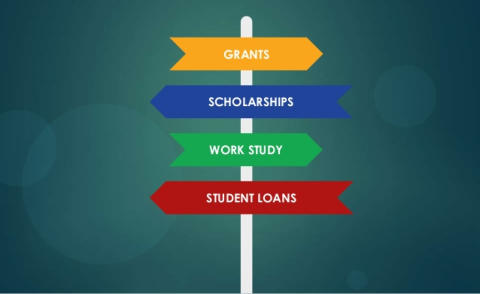
TYPES OF AID AVAILABLE
College can be expensive, but, thankfully,
there are lots of ways to fund it, for free,
if you invest the time and energy into
finding the right sources, and these
sources are usually grouped together
under the umbrella of “Financial Aid.”
Yet, there are several kinds of financial aid
and it’s very important to know the
differences between them because they
all have varying eligibility criteria which
determines who may receive the funds.
Therefore, we have provided a guide to
help you navigate the sometimes tricky
waters of financial aid and how to avoid
some costly mistakes.
GRANTS
Grants, better known as “ Free Money,” are
a wonderful way to pay for college because
they don’t have to be paid back. Grants
are generally funded through three main
sources, which are the federal government,
state government, and institutions, such
as private businesses or colleges and
universities.
Not all grants are the same, seeing as how
they have varying qualifications. This is
especially true of grants from private
institutions. However with federal grants
from the government, all you have to do
is demonstrate financial need. You just
need to complete the FAFSA to be
considered for grants such as the Pell
Grant or Federal Supplemental
Educational Opportunity Grants (FSEOG)
SCHOLARSHIPS
Just like grants, scholarships don’t need
to be paid back, which makes them also
a very attractive way to pay for college.
Yet, unlike grants, you have to do a little
bit more than just demonstrate you are
in need of funding.
The majority of scholarships are based on
academic merit, athletic ability, or some
other criteria other than financial need.
There are thousands of scholarships for
which you may qualify, seeing as how
many are designed for particular groups
of people. For example, there are
scholarships that range from just for
women all the way to dog lovers who live
in Alaska. As you can see, the options
numerous. You just have to do your
research to find them.
Moreover, unlike a grant, unless you are
attending a college with extremely low
tuition, a scholarship can cover the entire
cost of your tuition, or you can stack them
up and pay off the entire cost.
Most students don’t apply for scholarships
out of fear they won’t receive them. Yet,
don’t let that fear stop you because even
if the award is just a few hundred dollars,
it can help reduce the cost of your
college education.
WORK-STUDY
If you demonstrate financial need, you can
work to pay for some of the costs of your
college through the work study program
which is funded by the government.
These jobs are part-time, because the
government feels you should spend as
much time as you can studying so you
can boost your grades and qualify for
scholarships. which in turn will free you
from the work-study program.
Since you have to demonstrate need to
the government in order to qualify for
work-study, you will have to complete the
FAFSA first.
If you are awarded work-study, you are
not necessarily guaranteed a job on
campus. If no jobs are readily available,
you will be responsible for finding a job
which qualifies as an appropriate work-
study one.
Remember, you can expect to earn at
the very least, the current federal
minimum wage. However, some jobs
will pay more, based on the skills
required for the position, such as research
or lab jobs.
Your school will usually disburse your
paycheck directly to you unless you
request your pay be applied directly
to pay off your tuition and fees.
STUDENT LOANS
Even though the interest rates are way
lower than those of traditional loans,
student loans are the least desirable form
of financial aid because you have to pay
it back at a cost more than the money
borrowed.
Loans should definitely be your last resort
when it comes to options for paying for
your college education. Many students
find it difficult to adjust to paying back
their loans straight out of college and in
up in default and deeper debt.
Yet, for those students who do have to
take this route, please become familiar
with all the loan terminology so it doesn’t
cost you in the long run.
Student loans can come from several
sources. The most common is from the
federal government through the U.S.
Department of Education’s Federal Direct
Loan program. However, students and
parents can borrow from loans come
from private lenders, such as banks and
other financial institutions.
Keep in mind if you do decide to borrow
from the federal government, you will
have to complete the FAFSA first because
you have to demonstrate need first.
HOME
ABOUT
OUR STORY
SCHOLARSHIP TYPES
FEATURED SCHOLARSHIPS
SCHOLARSHIP FINDERS
FAFSA HELP
FINANCIAL AID
STUDENT LOANS
ESSAY TIPS
COLLEGE SEARCH
SPONSORSHIP
PODCASTS
EVENTS
OUR TEAM
CONTACT